
Best Hay Feeders for Goats in 2026: 4 Practical Picks

Will your feeder keep hay usable without crowding goats at the rack? For a small herd that needs a permanent everyday station, the best hay feeders for goats in 2026 balance containment, weather cover, safe access, and a footprint that fits your pen. Our best livestock hay feeders for 2026 overview compares options for broader farm setups.
Elevated feeding keeps forage off the ground. Oregon State University Extension notes that feeding hay above ground helps keep it sanitary and reduces waste, as explained in its sheep and goat feeding guidance. For goats, also weigh feeding style: a covered rack suits exposed feeding areas, while a hanging bag or net contains hay. Openings, height, and anchoring matter as much as capacity, especially when horned goats share a feeder.
At a glance: goat hay feeders compared
| Rank | Feeder | Design | Practical fit | Check before choosing |
|---|---|---|---|---|
| 1 | Large Hay Feeder for Goats & Sheep with Roof & Wheels | Covered, mobile hay and grain station | Outdoor feeding and multiple animals | Freestanding footprint and assembly |
| 2 | Wall Mount Hay Feeder With Roof for Goats, Horses & Sheep | Wall-mounted hay and grain rack | Saving floor space in a barn or pen | Needs a sturdy mounting surface |
| 3 | Slow Feed Hay Bag for Goats, Sheep & Horses with Quick Fill Collar | Hanging mesh bag | Contained portions at a stall or fence | Needs a secure hanging point |
| 4 | Goat Feeder Net Kit | Slow-feed net for a separate V-rack | Adding mesh feeding to a compatible rack | Feeder is sold separately |
How to choose a feeder goats can use comfortably
Start with your goats, not the largest capacity number. Count how many need access at once, consider whether they have horns, and check that the openings let them reach hay without catching their heads. Langston University notes that horns can cause problems with some keyhole-style feeding openings in its goat feeding systems information.
For a group with horned goats, inspect the feeder opening and watch how each animal enters and backs away. Texas A&M AgriLife Extension’s goat-herder nutrition guide warns that mature goats with horns can get their heads stuck in creep-feeder openings. That example is a reminder to check the particular design and your animals rather than assume one spacing suits every herd.
Next, match the structure to your routine. A roof helps shelter hay at an exposed feeding station; a wall mount frees floor space but depends on a sound support. Wheels suit setups where you move the feeder, while a hanging bag needs a secure place to hang. If you are deciding among fixed racks, bags, and combination designs, our goat hay feeder buying guide covers the main trade-offs.
1. Large Hay Feeder for Goats & Sheep with Roof & Wheels
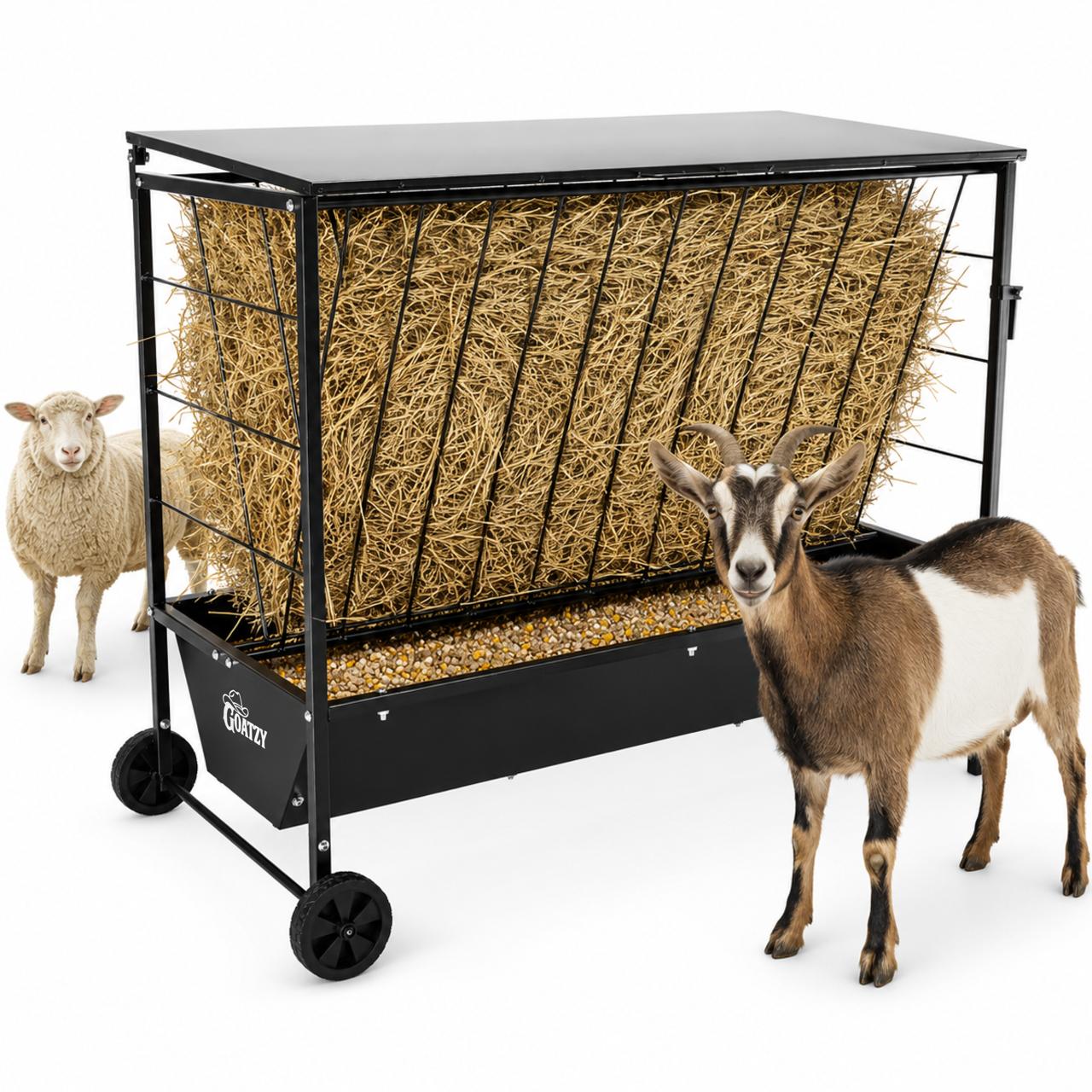
Best for: You want a covered, freestanding feeding station that can be repositioned around a barn, pen, or pasture.
This two-in-one feeder combines a 50-gallon hay rack with a 20-gallon grain tray. Its hinged roof shelters hay, and its wheels and locking mechanism make moving it between feeding areas easier. Goatzy describes this model as designed to reduce hay waste by up to 60%; that is a company claim, not a guaranteed result for every herd or setup.
Goatzy founder Lila Weston has more than 15 years of experience raising livestock. Goatzy also says its equipment is tested in real farm conditions and co-designed with working breeders, with more than 60 farmers involved in co-design. That background is relevant when you want equipment shaped around regular farm chores.
Pros:
- The roof and catch tray help keep hay contained and protected from weather.
- Separate hay and grain areas organize feeding in one station.
- Wheels let you reposition the feeder instead of lifting it.
Cons:
- A freestanding unit takes more floor space than a wall-mounted rack and needs assembly.
2. Wall Mount Hay Feeder With Roof for Goats, Horses & Sheep
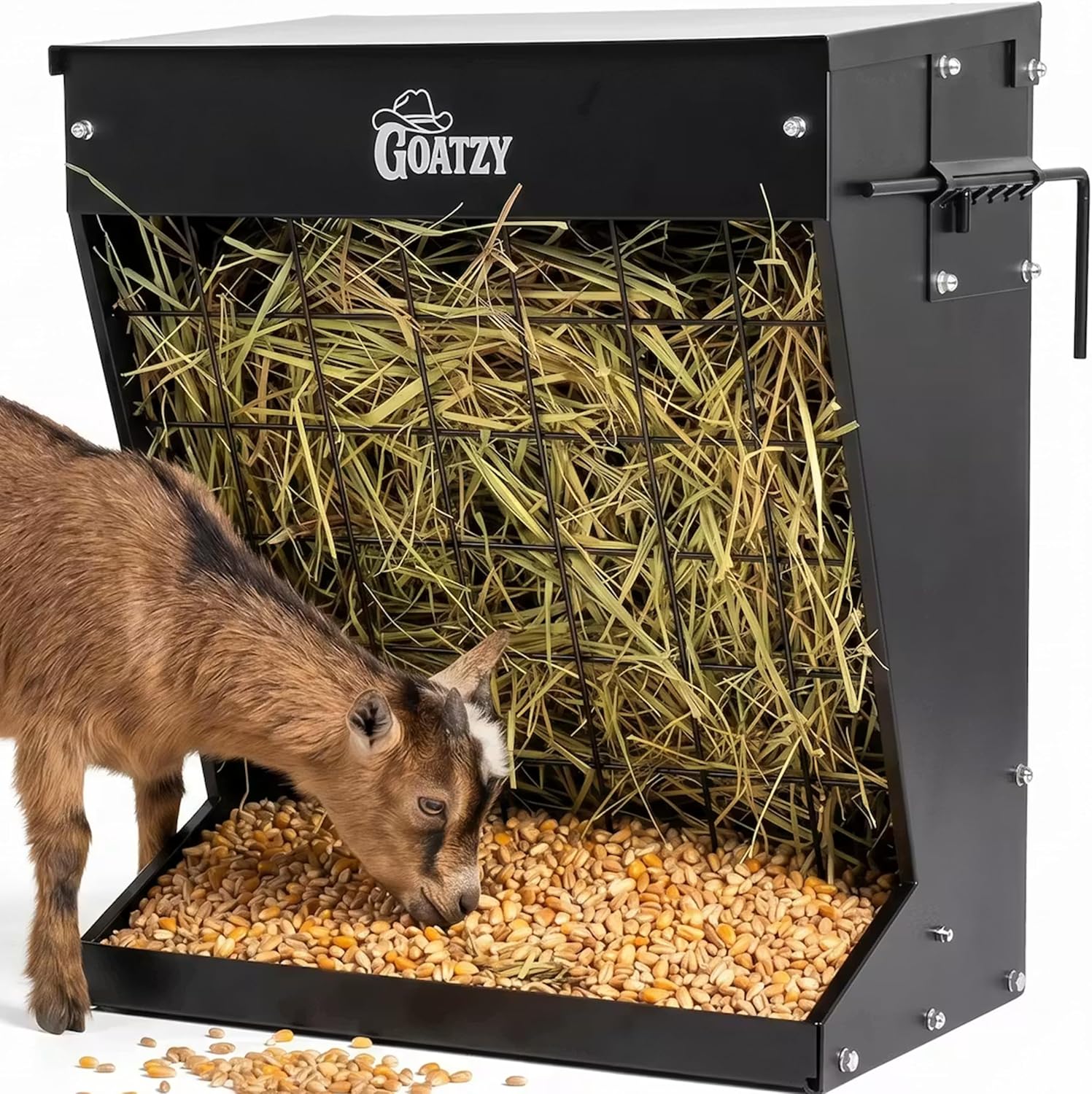
Best for: You have limited floor space and a suitable wall or fence post for mounting.
The Wall Mount Hay Feeder With Roof for Goats, Horses & Sheep combines a roofed hay rack with a lower grain tray. Its listed capacity is 25 gallons, and the galvanized steel construction is designed for use in a barn, stable, or pasture. Mounting it can free up floor space and leave room to clean beneath it.
Pros:
- The wall-mounted design keeps the feeding station off the floor.
- A roof shelters hay, while the lower tray provides a separate place for grain.
- Included mounting hardware supports installation on a sturdy wall or fence post.
Cons:
- You need a suitable support and secure installation, so it is less flexible to relocate than a mobile feeder.
If you only need an open rack rather than a roofed combination feeder, compare the options in our guide to goat basket feeders.
3. Slow Feed Hay Bag for Goats, Sheep & Horses with Quick Fill Collar
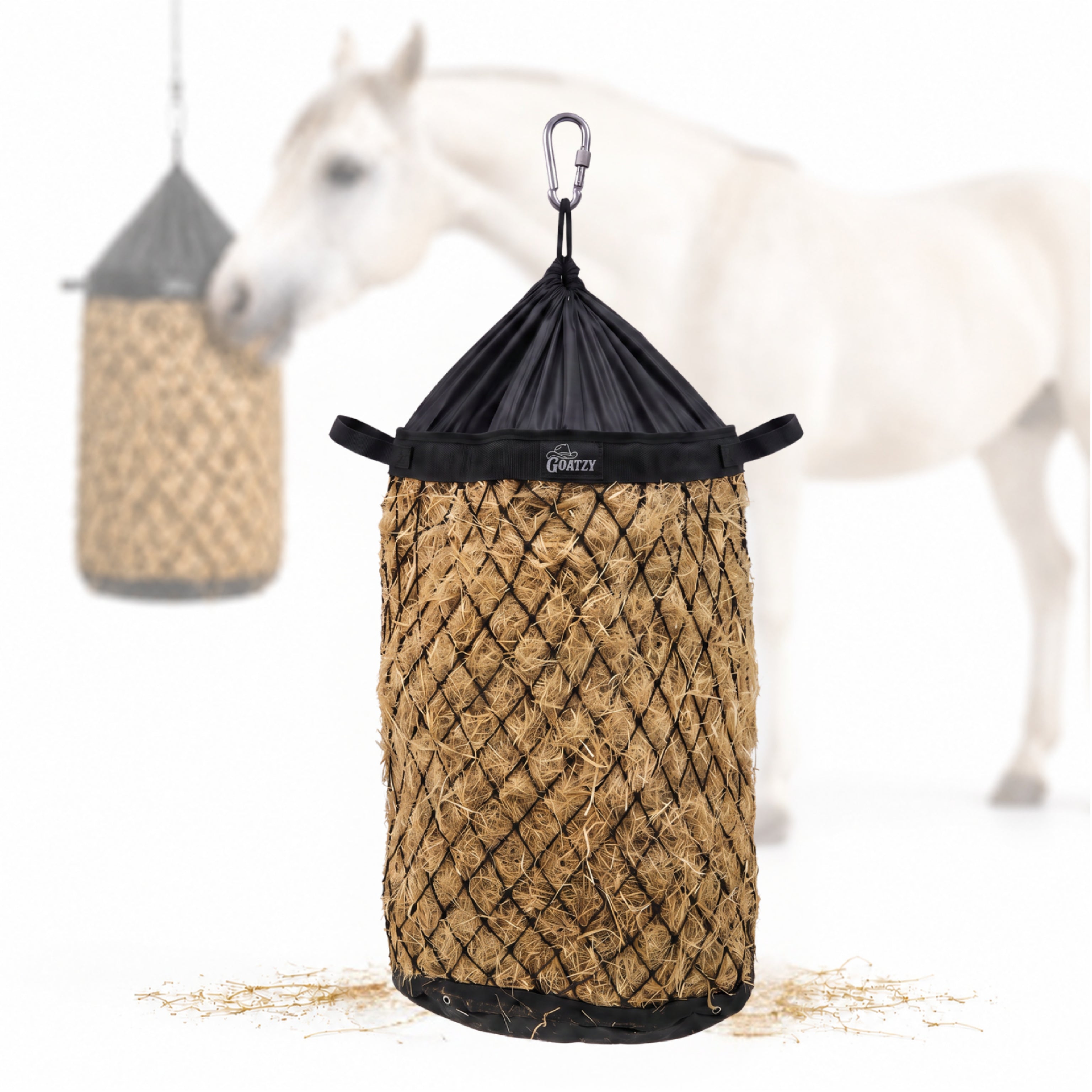
Best for: You want to hang a contained portion of hay at a stall, fence, or pasture gate.
The Slow Feed Hay Bag for Goats, Sheep & Horses with Quick Fill Collar holds four to six flakes and has 1.9-inch mesh openings. Its semi-rigid collar keeps the opening wide while you fill it, and a carabiner lets you attach it to a suitable hanging point. This format works where a large freestanding feeder would take up too much room.
Pros:
- The hanging bag contains hay without requiring a full rack or feeder station.
- The Quick Fill Collar makes the opening easier to hold open while loading.
- The stated capacity suits a stall or feeding point where you refill by portion.
Cons:
- You need a secure hanging point and should check the mesh and attachment regularly for wear.
- Mesh requires extra care around horned goats and animals with ear tags.
4. Goat Feeder Net Kit
Best for: You already have a compatible four-foot V-rack and want to add a slow-feed net.
This kit is designed to fit a standard four-foot metal V-rack, which is sold separately. Its 1.5-inch openings let goats pull hay through the mesh, and the net is described as holding one bale. Check your rack dimensions before ordering, since the kit is not a standalone feeder.
Pros:
- It adds a net feeding method to a compatible rack you already own.
- The net holds a bale and keeps hay contained within the feeder.
Cons:
- You need to buy or already own the compatible V-rack, and the kit is not a complete feeder on its own.
- Check mesh placement and animal access, especially with horned goats or ear tags.
Which feeder is the best fit for your herd?
Choose the large roofed feeder when you want a mobile, covered station with separate hay and grain areas. Pick the wall-mounted model when floor space is the priority and you have a sturdy mounting surface. A hanging bag suits smaller feeding points, while the net kit makes sense if you already use a compatible V-rack.
Before buying, measure the space, count how many goats need access at once, and inspect the openings against your herd’s size and horn status. Plan how you will anchor or hang the feeder, refill it, and remove old or damp hay. A practical feeder is one your goats can use comfortably and you can maintain as part of your normal routine.
Choose for access, shelter, and daily chores
The best goat hay feeder for your setup keeps hay contained while giving every animal comfortable access. For many small farms, a covered rack offers a useful balance of shelter and organized feeding. A wall mount, hanging bag, or net kit may suit your space better. Check openings, mounting, and capacity before settling on a design.
Make daily hay feeding easier
If you are replacing a small net with a more permanent feeding station, consider how much hay your herd needs, whether the feeder will sit outdoors, and how often you want to move it. A roofed, freestanding design suits feeding areas where weather protection and repositioning matter.

Our large feeder combines a covered hay rack with a separate grain tray and wheels for moving it around your farm. Goatzy says this model is designed to reduce hay waste by up to 60%, though results are not guaranteed for every setup. See our covered hay feeder for goats and check whether its size and layout fit your herd.
Frequently Asked Questions
What type of hay feeder works well for a small goat herd?
A compact wall-mounted rack or hanging bag can suit a small group, depending on your space and refill routine. Check that all goats can reach without crowding.
Are hay nets suitable for horned goats?
Use extra care with mesh around horned goats and animals with ear tags, since they can catch. Check access and placement regularly, and choose a design that lets your goats withdraw safely.
Does a roofed hay feeder help outdoors?
A roof helps shelter hay from rain and other direct weather exposure. You should still check the hay and feeding area routinely for dampness or spoilage.
Should you choose a wall-mounted or mobile feeder?
A wall-mounted feeder saves floor space when you have a sturdy place to install it. A wheeled feeder is more useful when you need to reposition the feeding station.
What should you check before buying a feeder?
Measure your space, consider how many goats need access at once, and check that openings suit their size and horn status. Also plan for secure installation, refilling, and cleaning.


