
Milking by Hand or by Machine: Find Your Best Fit

Is hand milking becoming a relic in the age of automation? While traditionalists may tout the benefits of personal connection with their cows, the stark reality is that modern dairy farming demands efficiency and productivity. As herd sizes grow, the debate intensifies: should you invest in machine milking or stick with hand techniques? This post will explore the intricate balance between hands-on care and technological advancement, providing insights into efficiency, costs, and animal welfare to help you determine the best fit for your herd.
Efficiency Comparison of Milking by Hand or by Machine
Milking efficiency is crucial for maximizing productivity on a dairy farm. Hand milking typically requires more time and labor per cow, which can become a limiting factor as herd sizes increase. On average, hand milking can take 10 to 15 minutes per cow, depending on the milker's skill and the cow's temperament.
In contrast, machine milking significantly reduces the time spent per cow. Automated systems can complete the milking process in approximately 5 to 8 minutes, allowing farmers to milk more cows in a shorter time frame.
The following table summarizes the time efficiency of both methods:
| Milking Method | Time per Cow (minutes) | Potential Milk Production Rate (cows/hour) |
|---|---|---|
| Hand Milking | 10 - 15 | 4 - 6 |
| Machine Milking | 5 - 8 | 7 - 12 |
By adopting machine milking, dairy farmers can enhance their overall milk production rates. Increased efficiency allows for better time management, enabling farmers to focus on other critical aspects of herd care and farm operations. Consequently, machine milking is often the preferred choice for operations with larger herds aiming to optimize productivity.
Cost Analysis of Milking Techniques
The financial implications of milking methods are a critical factor for dairy farmers. Hand milking generally requires a lower initial investment, as it primarily involves purchasing basic equipment such as buckets, filters, and sanitizing supplies. This setup can often be achieved for under $500, making it accessible for small-scale operations or hobby farmers.
In contrast, machine milking systems involve a significant upfront investment. Depending on the complexity and capacity of the system, costs can range from $2,000 to over $20,000. This includes purchasing milking machines, pipeline systems, and ancillary equipment. While the initial cost is higher, machine milking can provide long-term savings through increased efficiency and reduced labor costs.
Ongoing operational costs also differ between the two methods. Hand milking requires more labor, as it is a time-consuming process. Farmers may need to allocate several hours daily for milking, which translates into higher labor costs over time. For larger herds, this can quickly add up, impacting overall profitability.
Machine milking, while initially more expensive, reduces the time and labor needed for milking. Once the system is in place, one operator can manage multiple cows simultaneously, leading to a decrease in labor expenses. This efficiency can significantly enhance profit margins, especially for large-scale operations.
The following table outlines the cost analysis for both milking methods:
| Milking Method | Initial Investment ($) | Ongoing Labor Costs ($/hour) | Time Required (hours/day) |
|---|---|---|---|
| Hand Milking | 500 | 15 - 20 | 2 - 4 |
| Machine Milking | 2,000 - 20,000 | 10 - 15 | 1 - 2 |
Evaluating these costs in relation to herd size is essential. Smaller herds may find hand milking more feasible financially, while larger operations are likely to benefit from the efficiency and long-term savings afforded by machine milking. By analyzing their specific circumstances, farmers can make informed decisions that align with their financial goals and operational needs.
Animal Welfare Considerations in Milking
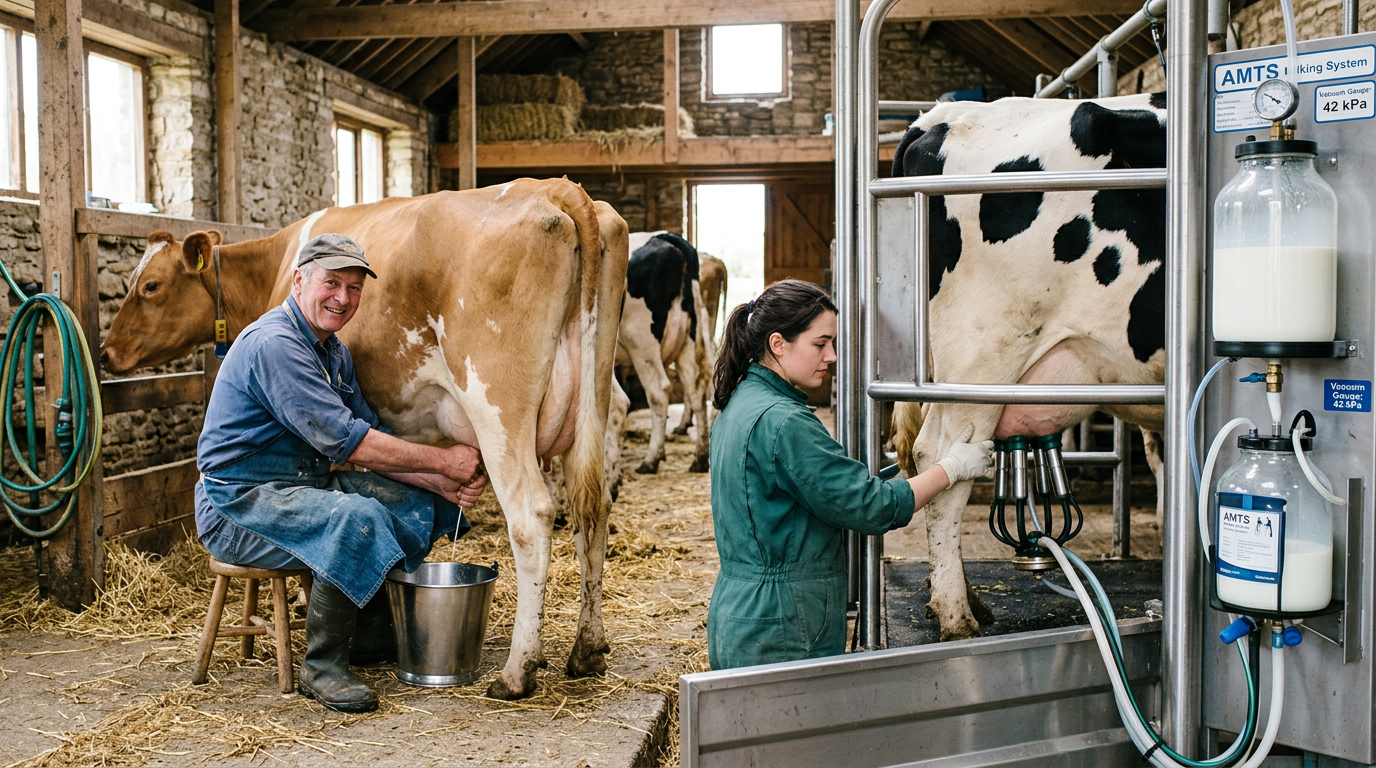
Animal welfare is a paramount concern in dairy farming, significantly influencing the choice between hand milking and machine milking. Both methods can impact cow health and stress levels, necessitating careful consideration by farmers.
Hand milking often allows for closer interaction between the farmer and the cow. This direct contact can foster a calming environment, which may reduce stress in the animals. Familiarity with the milker can enhance the cow's comfort, leading to a more relaxed milking experience.
On the other hand, machine milking, when executed correctly, can also promote animal welfare. Automated systems are designed to be gentle and efficient, minimizing discomfort during the milking process. The use of proper equipment, such as well-fitted milking machines, can significantly reduce stress and prevent injuries.
However, improper use or poorly maintained equipment can lead to adverse effects on cow health, such as over-milking or teat injuries. Thus, training and regular maintenance are essential to maximize the benefits of machine milking while ensuring animal welfare.
The following table summarizes the animal welfare considerations for both methods:
| Milking Method | Key Welfare Benefits | Potential Risks |
|---|---|---|
| Hand Milking | Enhanced cow interaction; lower stress levels | Labor-intensive; time-consuming |
| Machine Milking | Efficiency; potential for reduced stress with proper use | Risk of injury if equipment is poorly maintained |
Farmers must evaluate both methods through the lens of animal welfare to determine the best fit for their herds.
Suitability for Different Herd Sizes
Selecting the right milking method is heavily influenced by the size of the herd. For small herds, typically consisting of fewer than 10 cows, hand milking can be a practical choice. This method allows for more personal interaction with each cow, which can enhance animal welfare and comfort. Hand milking requires minimal equipment and investment, making it accessible for small-scale farmers or hobbyists who may not need the efficiency of machine milking.
On the other hand, as herd size increases, the limitations of hand milking become apparent. For larger herds, usually over 20 cows, machine milking becomes advantageous. It significantly reduces the time required for milking, allowing farmers to manage more cows effectively. Machine milking systems can handle multiple cows simultaneously, increasing overall productivity and facilitating better time management.
The following table summarizes the suitability of each milking method based on herd size:
| Herd Size | Recommended Milking Method | Key Advantages |
|---|---|---|
| Small (1-10 cows) | Hand Milking | Lower cost, personal interaction, minimal equipment |
| Medium (11-20 cows) | Hand or Machine Milking | Balance of cost and efficiency, flexibility |
| Large (20+ cows) | Machine Milking | Higher efficiency, reduced labor time, increased output |
Farmers should assess their herd size and operational needs to determine the most suitable milking method, optimizing efficiency and productivity in their dairy operations.
Practical Tips for Farmers: Choosing Milking Methods
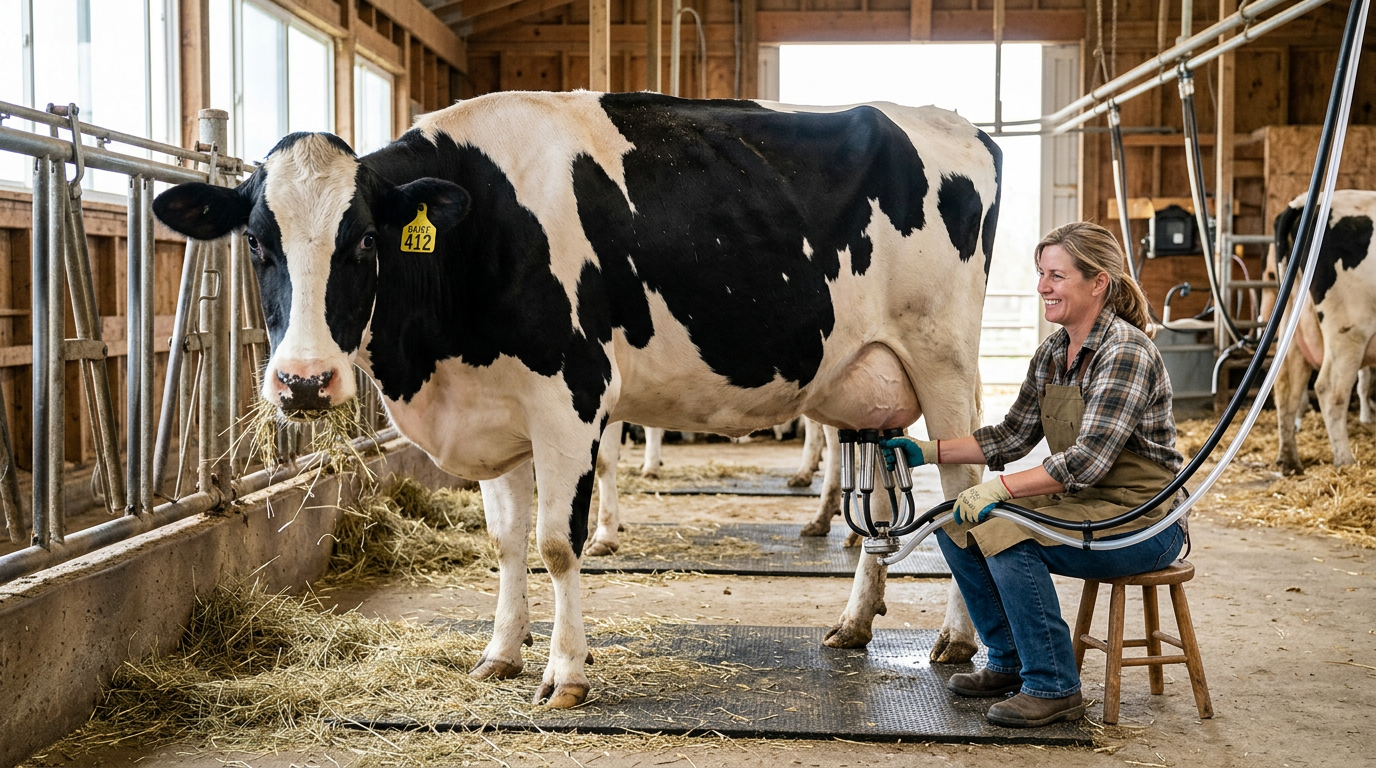
When deciding between hand milking and machine milking, farmers should consider several practical factors to enhance their milking practices effectively.
Best Practices for Hand Milking:
- Sanitation: Always ensure that hands and equipment are clean to prevent contamination. Use warm water and antiseptic solutions.
- Cow Comfort: Create a calm environment for cows to reduce stress during milking. Approach them gently and maintain a consistent routine.
- Technique: Use a rhythmic motion and apply appropriate pressure to stimulate milk flow. Proper technique can improve yield and reduce discomfort for the cow.
Key Factors for Selecting a Milking Machine:
- Herd Size: Choose a machine that can accommodate your herd size. Smaller herds may benefit from portable systems, while larger operations require more robust setups.
- Ease of Use: Look for user-friendly systems that simplify the milking process. Features like adjustable settings and easy-clean components can save time and labor.
- Maintenance Requirements: Assess the maintenance needs of the machine. Opt for models that offer straightforward upkeep to minimize downtime.
The following table summarizes the considerations for both methods:
| Milking Method | Key Considerations |
|---|---|
| Hand Milking | Sanitation, Cow Comfort, Technique |
| Machine Milking | Herd Size, Ease of Use, Maintenance |
By evaluating these factors, farmers can make informed choices that align with their operational goals and herd management strategies.
Expert Insights and Real-World Examples
Dairy farming experts emphasize the importance of aligning milking methods with herd size, management style, and overall farm goals. A case study from a mid-sized dairy farm in Wisconsin highlights how transitioning from hand milking to machine milking increased efficiency and reduced labor costs. The farmer reported that after investing in a machine milking system, milking time decreased by over 50%, allowing staff to focus on other critical tasks such as herd health management and pasture maintenance.
Conversely, a small-scale goat dairy farm in Vermont successfully utilizes hand milking to maintain a close relationship with their animals. The owner values the tactile nature of hand milking, believing it enhances animal welfare by reducing stress during the milking process. This approach allows for better monitoring of each animal's health and behavior, which can be crucial in smaller herds where personalized care is essential.
Expert recommendations vary based on herd size and management philosophy. For larger operations, machine milking is often advised due to its efficiency and scalability. Experts suggest considering factors such as:
- Initial Investment: Evaluate the budget for purchasing equipment.
- Labor Availability: Assess the workforce and their ability to handle manual milking.
- Animal Welfare: Consider how each method affects the cows' comfort and stress levels.
The following table summarizes insights from various dairy farming experts regarding the suitability of milking methods based on herd size:
| Herd Size | Recommended Milking Method | Key Considerations |
|---|---|---|
| Small (<50 cows) | Hand Milking | Lower investment, personal animal care, flexibility |
| Medium (50-200 cows) | Hybrid Approach | Combination of hand and machine milking for efficiency |
| Large (>200 cows) | Machine Milking | High efficiency, reduced labor costs, scalability |
These real-world examples and expert insights illustrate that the choice between hand and machine milking ultimately depends on the unique circumstances of each farming operation. By carefully considering herd size, management style, and available resources, farmers can select the most appropriate milking method for their needs.
Final Words
Final Words
Efficiency in milking impacts both productivity and animal welfare. This article compared hand and machine milking, emphasizing the time savings and increased milk production rates associated with machine milking. A thorough cost analysis revealed the financial implications of both methods, guiding farmers in their investment decisions.
Animal welfare considerations highlighted that machine milking can enhance cow comfort when executed properly, while hand milking fosters interaction. The suitability of each method varied with herd size, making it crucial for farmers to choose wisely.
With practical tips and expert insights, farmers are better equipped to optimize their milking practices. Ultimately, selecting the right approach—Milking by Hand or by Machine What Fits Your Herd—can lead to a more productive and humane dairy operation.
FAQ
Q: What are the efficiency differences between hand and machine milking?
A: Machine milking significantly reduces time spent per cow, enhancing overall milk production rates compared to hand milking. This efficiency is crucial for optimizing time management in dairy operations.
Q: How do the costs of hand milking compare to machine milking?
A: Hand milking has lower initial costs, while machine milking requires a higher investment. Ongoing expenses and labor implications also vary, influencing overall cost-effectiveness based on herd size.
Q: What impact do milking methods have on animal welfare?
A: Machine milking, when done properly, can reduce stress levels in cows. Hand milking may enhance cow interaction, but both methods should prioritize cow comfort and health for optimal welfare.
Q: Which milking method is best for different herd sizes?
A: Hand milking is typically more practical for small herds, while machine milking is advantageous for larger operations. The choice should align with herd size to optimize efficiency.
Q: What are some practical tips for choosing milking methods?
A: Farmers should consider best practices for manual milking and evaluate key factors like herd size and milking goals when selecting a milking machine or technique.
Q: What insights can experts offer regarding milking methods?
A: Dairy farming experts provide valuable recommendations and real-world case studies, helping farmers make informed decisions about the implications of hand versus machine milking.


